
Benjamin Banneker
Invented America's First Clock
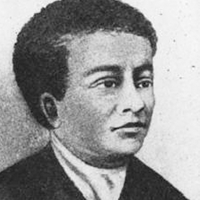
In the Stevie Wonder song "Black Man," the Motown marvel sings of Benjamin Banneker: "first clock to be made in America was created by a black man." Though the song is a fitting salute to a great inventor (and African Americans in general), it only touches on the genius of Benjamin Banneker and the many hats he wore – as a farmer, mathematician, astronomer, author and land surveyor.
Like a lot of early inventors, Benjamin Banneker was primarily self-taught. The son of former slaves, Benjamin worked on the family tobacco farm and received some early education from a Quaker school. But most of his advanced knowledge came from reading, reading and more reading. At 15 he took over the farm and invented an irrigation system to control water flow to the crops from nearby springs. As a result of Banneker's innovation, the farm flourished – even during droughts.
But it was his clock invention that really propelled the reputation of Benjamin Banneker. Sometime in the early 1750s, Benjamin borrowed a pocket watch from a wealthy acquaintance, took the watch apart and studied its components. After returning the watch, he created a fully functioning clock entirely out of carved wooden pieces. The clock was amazingly precise, and would keep on ticking for decades. As the result of the attention his self-made clock received, Banneker was able to start up his own watch and clock repair business.
And Benjamin Banneker's accomplishments didn't end there. Borrowing books on astronomy and mathematics from a friend, Benjamin engorged himself in the subjects. Putting his newfound knowledge to use, Banneker accurately predicted a 1789 solar eclipse. In the early 1790s, Banneker added another job title to his resume – author. Benjamin compiled and published his Almanac and Ephemeris of Pennsylvania, Delaware and Maryland (he would publish the journal annually for over a decade), and even sent a copy to secretary of state Thomas Jefferson along with a letter urging the abolition of slavery.
Impressed by his abilities, Jefferson recommended Banneker to be a part of a surveying team to lay out Washington, D.C. Appointed to the three-man team by president George Washington, Banneker wound up saving the project when the lead architect quit in a fury – taking all the plans with him. Using his meticulous memory, Banneker was able to recreate the plans. Wielding knowledge like a sword, Benjamin Banneker was many things – inventor, scientist, anti-slavery proponent – and, as a result, his legacy lives on to this day.
Frequently Asked Questions About Benjamin Banneker
Who was Benjamin Banneker?
Benjamin Banneker was a self-taught African American scientist, mathematician, astronomer, and inventor in the late 1700s. He is best remembered for his accomplishments in astronomy and his role in early American scientific history.
What inventions is Benjamin Banneker known for?
Benjamin Banneker is best known for building a highly accurate wooden clock entirely by hand. He also created astronomical almanacs that were widely used in the 18th century.
Why is Benjamin Banneker an important figure in American history?
Banneker is significant because he broke barriers in science and technology during a time when African Americans faced extreme limitations on education and professional opportunities. His work demonstrated intellectual excellence and challenged prevailing societal assumptions.
Did Benjamin Banneker work on the design of Washington D.C.?
Yes, Banneker was part of the survey team that helped map the federal district that became Washington D.C. He worked alongside Major Andrew Ellicott and contributed his mathematical and astronomical skills to the project.
How did Benjamin Banneker learn astronomy and mathematics?
Banneker was largely self-educated. He studied mathematics and astronomy using borrowed books and taught himself complex principles. His dedication to learning enabled him to make noteworthy contributions to science.
What is the Banneker clock?
The Banneker clock was a remarkable wooden clock built by Benjamin Banneker in his early twenties. It kept accurate time for decades and displayed craftsmanship and precision normally associated with professionally trained clockmakers.
What are Banneker’s almanacs?
Banneker published annual almanacs that included astronomical data, weather predictions, and useful calculations. These volumes were respected by farmers, scientists, and maritime navigators of the period.
Did Benjamin Banneker influence civil rights?
Banneker used his intellectual reputation to advocate for equality. He is known to have sent a letter to Thomas Jefferson urging the end of slavery and equal rights for African Americans, illustrating his commitment to social justice.
Where was Benjamin Banneker from?
Benjamin Banneker was born in 1731 in Baltimore County, Maryland. He grew up on a farm and developed his skills independently through self-study and observation.
How is Benjamin Banneker honored today?
Banneker’s legacy continues through museums, monuments, schools, and historical studies that celebrate his life and contributions to science and American history. His story remains an inspiration for scientists and students alike.
Are there books about Benjamin Banneker?
Yes, several biographies and historical books explore Benjamin Banneker’s life, his scientific work, and his role in American history. These texts help preserve his impact on science and civil rights.
How did Banneker contribute to early American science?
Banneker contributed through his detailed astronomical observations, his almanacs, his public correspondence with influential leaders, and his integral role in surveying the federal capital. His precise calculations and innovations earned him respect among his contemporaries.
To learn more about African-American inventor Benjamin Banneker, visit:
Africans in America: Benjamin Banneker
Who Was Benjamin Banneker?